More home buyers are quietly shifting what they want from a property — less about square footage and more about what the surrounding environment actually feels like to live in day after day. That shift is showing up in places like Banks, Oregon, where a listing such as 45354 NW Hartwick Rd is drawing serious attention not just for the home itself, but for everything that comes with choosing that kind of location. Banks sits in Washington County, tucked between the Coast Range foothills and the broader Portland metro area, and it offers something that's genuinely hard to find — open space, low noise, a real sense of privacy, and still a reasonable drive to work, schools, and grocery runs. Buyers across the country are weighing green surroundings and lower daily stress more heavily than they used to, and that's not a passing trend. It's a practical recalibration of what home is supposed to feel like. A property like this one on NW Hartwick Rd fits that recalibration well — it's not just a house in a quiet town, it's a setup that can genuinely change how your mornings feel, how you decompress after work, and how grounded your day-to-day routine becomes. This article walks through five specific lifestyle reasons why peaceful living in Banks appeals to buyers who want more than just a good deal on a home, and why this particular listing keeps coming up as a strong match for that kind of life.
No source link or source content summary was provided, so no external linking can be added.
Quiet Living Without Feeling Far Away
One of the most common hesitations buyers have about rural properties is the logistics — specifically, whether stepping away from city infrastructure means adding an hour to every errand or stretching a short commute into something exhausting. Banks sits about 30 miles west of Portland along Highway 26, and that position puts a surprising number of destinations well within reach on any given day.
Here's a quick look at what's accessible from Banks and why each destination matters for daily life —
- Forest Grove – roughly 10 to 15 minutes away, this is the closest hub for everyday needs — grocery stores, pharmacies, local dining, and Washington County's Pacific University medical services
- Hillsboro – about 20 to 25 minutes east, Hillsboro is the heart of Oregon's Silicon Forest tech corridor, home to major employers like Intel, and it also has strong hospital access through Tuality Community Hospital
- Beaverton – around 30 minutes out, Beaverton adds a wider range of retail, restaurants, and services, plus convenient access to MAX light rail for those who prefer to skip driving into the city entirely
- Portland – approximately 35 to 45 minutes depending on traffic, Portland remains reachable for work, cultural events, specialty medical care, and the Portland International Airport
That range of access changes the math considerably. A buyer who works in Hillsboro's tech sector isn't looking at a punishing drive — they're looking at a commute that's manageable and, on quieter mornings, genuinely pleasant through the rolling farmland of Washington County.
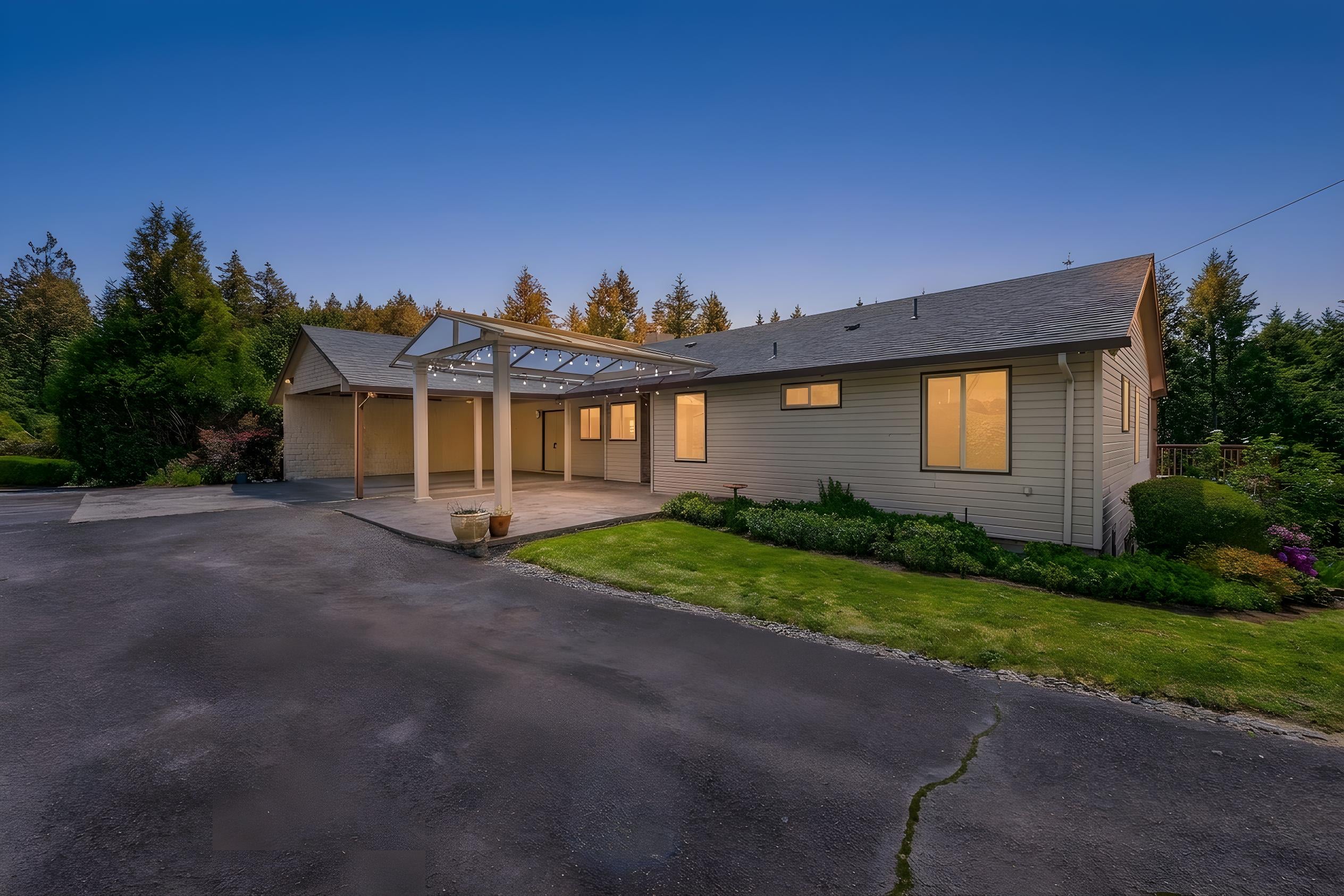
Sitting on NW Hartwick Rd, 45354 NW Hartwick Rd benefits directly from this geography. You get the stillness of a rural setting — the kind where evenings are actually quiet and the view from your window isn't another roofline — without having to sacrifice access to the places that keep daily life running. Western Washington County has held steady as an appealing pocket for buyers precisely because that balance is real and not just a selling point. Properties here don't ask you to choose between calm and convenience, and that's a harder combination to find than most buyers expect before they start looking.
Room to Breathe Inside and Out
Moving from a standard suburban neighborhood to a property in Banks changes something that's hard to put into words until you've actually experienced it — the absence of intrusion. No car doors slamming next door at 6 a.m., no fence line that sits two feet from your kitchen window, no shared driveway conversations you didn't ask to be part of. The extra space and separation that come with larger lots here aren't just a real estate feature — they quietly reshape how you move through your own day.
What Larger Lots Actually Give You
Properties around Banks tend to sit on generous parcels of land, which naturally puts distance between homes. That distance does a few things at once — it softens ambient noise, it removes the visual clutter of neighboring structures, and it gives you actual room to use your outdoor space without feeling like you're on display. There's no need to time your backyard time around what the neighbors are doing, and there's no shared fence to negotiate. The land simply gives you a buffer that suburban lots, by design, rarely offer.
That kind of separation also means more flexibility in how the property gets used day to day. A larger lot isn't just more grass to mow — it's room to section off areas for different purposes without any one use crowding out another. Gardening, parking a trailer, letting a dog run, setting up a fire pit — these things coexist comfortably when there's enough land to support them.
How 45354 NW Hartwick Rd Fits That Picture
A property like 45354 NW Hartwick Rd on the outskirts of Banks is the kind of place where outdoor space becomes genuinely functional rather than decorative. A covered deck off the main living area works well as a morning coffee spot — and with approximately 43% of Americans considering coffee a crucial start to their day, having a calm, private place to drink it matters more than most buyers initially expect. Beyond that, the lawn area opens up options for kids, pets, or weekend gatherings without the cramped feel of a smaller yard.
"Outdoor living spaces fundamentally enhance the quality of daily life," and a property with this much room makes that easy to see. There's space for raised garden beds without sacrificing lawn area, room for a hobby shed or workshop without it dominating the property, and enough separation from the road that the whole setup feels settled and private. "Adults find outdoor spaces ideal for morning coffee, remote work breaks, or evening relaxation" — and a property with multiple distinct zones makes all three possible without compromise.
Tighter suburban lots rarely support that kind of variety. Most buyers on a standard quarter-acre lot end up choosing between uses rather than accommodating them all. Acreage properties shift that equation entirely — the land itself becomes part of what you're buying, not just the structure sitting on it, and that tends to hold its value in ways that a well-staged interior simply can't replicate over time.
A Home That Supports Better Daily Routines
Beyond the acreage and the views, what buyers are increasingly weighing is how a home actually feels to live in — not on moving day, but on a regular Tuesday. There's a growing preference for properties that don't add friction to the day, where the environment itself supports rest, focus, and a clear boundary between work hours and personal time.
- Better sleep and calmer mornings. The GW School of Medicine and Health Sciences notes that a bedroom should be "quiet, dark, relaxing, and at a comfortable temperature" for genuine restorative sleep — and that "excess light exposure can throw off your sleep and circadian rhythm." Rural settings naturally support both of those conditions. Away from streetlights and road noise, nights in Banks are genuinely dark and still. Mornings follow a different rhythm too. There's no garbage truck at 5:30 a.m., no neighbor's car alarm, no ambient hum from a nearby highway. Waking up without that kind of disruption changes how the rest of the morning unfolds — slower, steadier, and far less reactive.
- More focused remote work with less mental fatigue. Taking a video call with a window view of Douglas firs instead of a parking structure is a small thing that compounds over time. Background noise from urban environments doesn't just distract — it drains. Working from a quieter setting means finishing the day with more mental energy left over, which matters whether you're a freelancer, a hybrid employee, or running a business from home. The absence of constant auditory input lets concentration settle in naturally rather than requiring constant effort to maintain it.
- A real separation between work and the rest of the day. One of the harder things to build in a dense neighborhood is a genuine off switch at the end of the workday. Properties with extra space — a covered porch, a detached structure, a spare room with enough square footage for a weight rack or a woodworking bench — give that transition somewhere to land. Stepping outside to a quiet porch as the light shifts in the evening is a different experience than closing a laptop and immediately hearing traffic. That physical and sensory shift is what makes the end of the day actually feel like the end of the day.
Settled into its spot along NW Hartwick Rd, 45354 NW Hartwick Rd offers the kind of layout and surroundings that make these routines possible without requiring much effort to maintain them. The home isn't just a structure with a certain number of bedrooms — it's a place where the conditions for sleeping well, working clearly, and unwinding properly are already built into the setting. That's the part of a home that doesn't show up in a square footage count but tends to matter most after the first few months of living there.
No source link or source content summary was provided, so no external linking can be added.
Nature Becomes Part of Everyday Life
Good routines and restful nights are only part of what shifts when you move to a property like this one. The other part is harder to quantify but easier to feel — it's what happens to your mood, your stress levels, and your general sense of ease when the land around you stops being something you pass through and starts being something you actually live inside of.
Emotional Benefits of Daily Green Space
Research consistently links regular exposure to natural surroundings with lower cortisol levels, improved mood, and faster mental recovery after cognitively demanding days. The effect isn't dramatic or sudden — it's cumulative. Over weeks and months, coming home to open land rather than a dense neighborhood quietly resets something in the nervous system. The mind has less to process, less visual noise to filter, and that reduction in stimulation carries real weight for people who spend their workdays in front of screens or inside demanding environments.
In Banks specifically, that benefit has a particular texture to it. The air coming off the Coast Range foothills carries a coolness that's distinct from anything you'd find closer to the city. The countryside opens up in every direction — rolling fields, tree lines shifting from deep green in summer to bare and stark in winter, and a sky that actually shows weather moving through rather than sitting behind a layer of urban haze. Pulling into the driveway at the end of a long day and being met by that kind of view does something that no amount of indoor design can replicate. The decompression starts before you even open the front door.
How Nature Shows Up in Everyday Life
The smaller moments matter just as much as the scenery. Watching the tree line outside the window change week by week as seasons turn — buds in March, full canopy by June, color in October, bare branches by December — gives the year a rhythm that feels grounding rather than repetitive. Stepping outside first thing in the morning for ten minutes of fresh air isn't a wellness practice that requires scheduling — it's just what you do when the air outside is worth stepping into. A property with enough land to support a small raised bed for herbs or vegetables turns that same outdoor space into something productive, which adds another layer of connection to the place you're living.
The Banks-Vernonia State Trail runs nearby and stretches 21 miles through forest and farmland, making it one of the more accessible multi-use trails in Washington County. Walking or biking it doesn't require loading a car or planning a weekend outing — it's close enough to fold into a weekday afternoon or a slow Saturday morning without any real effort. That kind of access turns outdoor time from an occasional activity into a regular one, which is where the actual lifestyle benefit lives.
Settling into a home where nature is genuinely present — not just visible from a distance but woven into the daily rhythm — tends to shift how connected buyers feel to where they live. That sense of rootedness is something a lot of buyers are actively searching for, even when they don't have the exact words for it yet.
A Small Town Setting That Feels Rooted and Flexible
What sets Banks apart from other quiet towns isn't just the pace — it's the way the town itself holds people over time. Daily lifestyle benefits are easy to notice in the first few weeks, but the longer-term pull of a place like this is something different, built from familiarity, community, and a property that can genuinely grow with you.
- Banks operates the way small towns used to before suburban sprawl made neighbors strangers. The Banks School District serves the community with a tight-knit feel that larger districts rarely replicate — school events, local sports, and community gatherings draw the same familiar faces year after year. The town's local services — a post office, feed stores, and nearby Forest Grove's broader retail — cover the practical side of daily life without requiring a long drive. Buyers who've spent years in larger cities often notice this shift quickly — the cashier who remembers your usual order, the neighbor who waves from their porch, the kind of low-level social ease that comes from simply being recognized. Locate KC notes that buyers increasingly prioritize "community events" as a key lifestyle feature, and Banks delivers that in a genuinely organic way rather than through planned developments trying to manufacture it.
- Peaceful surroundings carry more weight when they're paired with a sense of actually belonging somewhere. A quiet house in an anonymous suburb and a quiet house in a town where you know your neighbors are two very different experiences. Banks offers the latter — a place where stability isn't just physical but social. That combination of calm and connection is what turns a property into something that feels permanent rather than temporary, and it's the kind of thing that's hard to replicate once you've had it.
- A property like 45354 NW Hartwick Rd has the kind of spatial flexibility that supports a household through different seasons of life. The land and layout can accommodate a dedicated vegetable garden, a workshop or hobby space, or a converted room for a family member moving in — all without the property feeling stretched. For buyers considering multigenerational arrangements or a home office setup, the square footage and lot size create real options rather than workarounds. That adaptability isn't something most buyers think about on day one, but it becomes increasingly valuable as needs shift over the years.
- Buyers who are planning five or ten years ahead tend to look for properties that won't require them to move again just because their circumstances changed. Having lifestyle calm now — the quiet mornings, the open land, the low-friction daily routine — alongside room to expand or repurpose the property later is a combination that holds its value in ways that are both financial and personal. That balance is genuinely rare to find in a single listing.
Settling into Banks means choosing a place where the surroundings, the community, and the property itself are all working in the same direction — toward something steady, adaptable, and worth staying for.
Final Thoughts
Choosing a home is really choosing a way of life. The five reasons covered here — convenience to everyday needs, generous open space, healthier daily routines, easy access to nature, and a long-term lifestyle fit — all point to the same thing. Buyers aren't just looking for square footage and a good price. They're looking for a place where the pace of life actually feels manageable.
That's what makes 45354 NW Hartwick Rd in Banks, OR stand out. It's not a compromise between rural and practical — it genuinely offers both. You get the quiet and the room to breathe, without giving up the basic conveniences that make day-to-day life run smoothly. That balance is harder to find than most buyers expect, and when a property gets it right, it tends to check boxes that buyers didn't even know they had on their list.
Banks, OR itself adds a lot to that equation. It's a small town with real character, close enough to Portland for work or errands, but far enough that the noise and crowding stay behind you when you head home.
If you've been feeling like your current living situation is working against you rather than for you, this kind of property is worth a serious look. The shift from a busy, cramped environment to something quieter and more spacious isn't just a real estate move — it changes how your days actually feel. That's a decision worth making with intention, and this listing is a solid place to start.
Check out this article next